


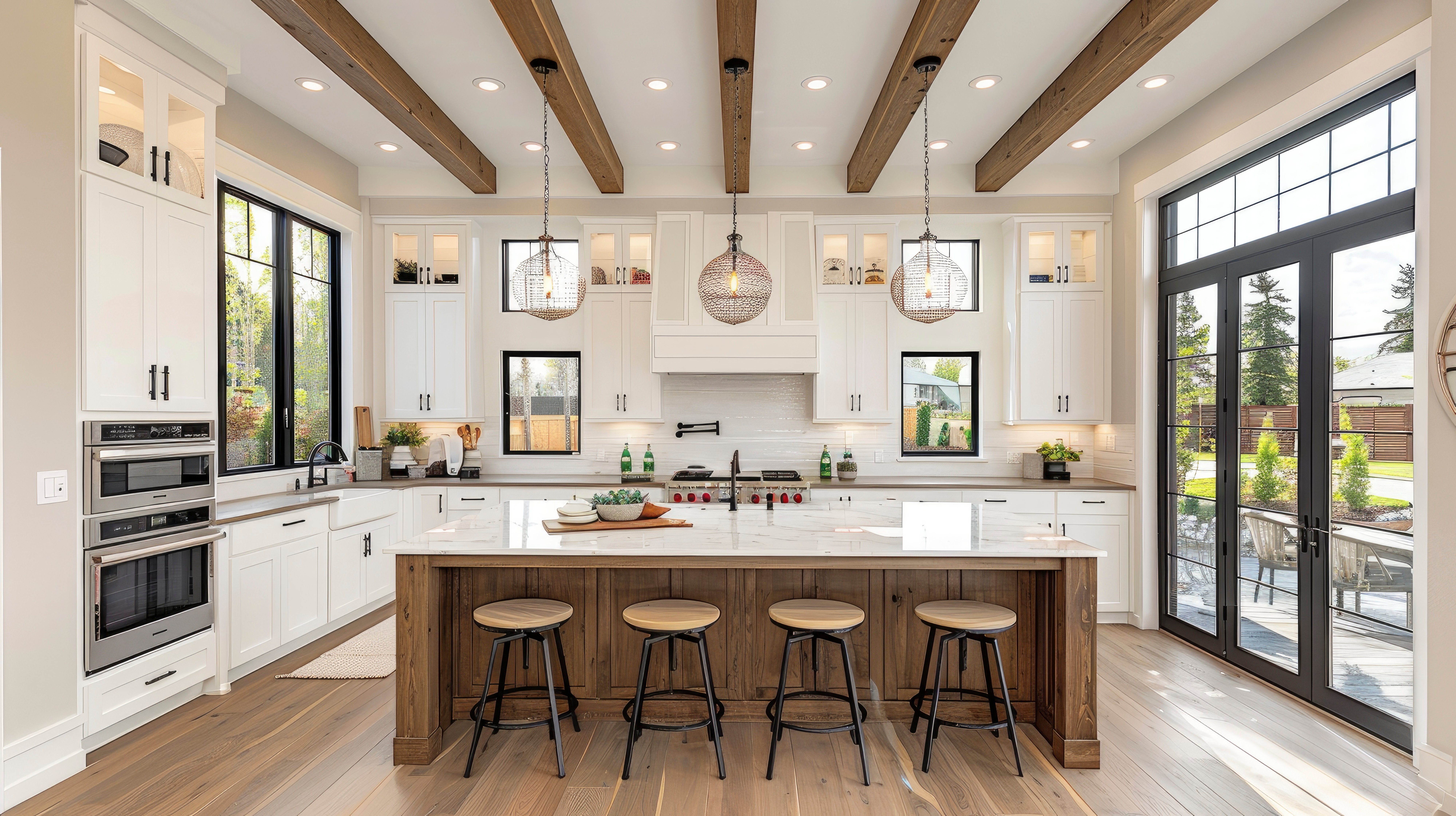
Anyone who has lived through a Sandhills summer knows the air holds onto moisture for months at a time. That humidity doesn't just make the outdoors feel heavier, it works its way into your home and interacts directly with any hardwood on the floor. Wood is a natural material that expands and contracts with moisture, so the species and construction you choose has a real effect on how your floors perform once the humid stretch of the year sets in.
Not every hardwood option responds to that seasonal swing the same way, which is why this decision deserves a closer look before installation rather than after.
How Wood Species Respond to Moisture
Some species are naturally more dimensionally stable than others, meaning they expand and contract less as humidity rises and falls. White oak is a common choice in the Sandhills partly because of its tight grain structure, which tends to resist moisture movement better than more porous species. Hickory is another strong performer here, prized for its density and resistance to the seasonal swelling that softer woods are more prone to.
Species with more open grain patterns, like some walnut or ash varieties, can be more sensitive to humidity swings and may show more visible movement between boards during peak summer months. That doesn't rule them out as an option, it just means they benefit from a bit more attention to the home's humidity control before and after installation.
Solid Versus Engineered Construction
Solid hardwood is a single piece of wood from top to bottom, which gives it a long lifespan and the ability to be refinished multiple times, but it also means the entire board reacts to moisture as one unit. In a home with a crawl space or higher ambient humidity, that can translate to more noticeable seasonal movement than some homeowners expect.
Engineered hardwood is built in layers, with a hardwood veneer on top of a plywood or high density core, and that layered construction gives it more dimensional stability in fluctuating humidity. For homes over a slab foundation or in rooms where humidity control is harder to maintain consistently, engineered hardwood is often the more forgiving choice without sacrificing the look of solid wood.
Finish and Board Width Matter Too
A wider plank shows more visible gapping or cupping than a narrower one when humidity shifts, simply because there's more surface area reacting to the same moisture change. Homeowners drawn to the wide plank look popular in farmhouse and modern designs should know that pairing it with a stable species and consistent indoor humidity levels goes a long way toward keeping that wider board looking flat and even.
Finish type plays a role as well. A well sealed finish helps slow how quickly moisture reaches the wood itself, which is one more reason a quality finish matters as much as the species selection when you're planning for a Sandhills summer.
Keeping Indoor Humidity in a Healthy Range
Most hardwood performs best when indoor relative humidity stays in a moderate, consistent range rather than swinging widely with the seasons. Running your HVAC system consistently through the summer, rather than letting the house sit warm and humid while you're away, helps keep both the wood and the subfloor beneath it in a more stable environment.
A basic hygrometer is an inexpensive way to keep an eye on indoor humidity levels, and it can help you catch a problem early if levels start climbing outside the range your specific hardwood was installed to handle. Small, consistent habits like this do more for long term floor performance than most homeowners realize.
Choosing the right hardwood for a Sandhills summer comes down to matching the species, construction, and finish to how your home actually holds humidity. At Moore Floors, Inc., we walk homeowners through those options in person so the floor you choose is built for our climate from day one. Visit us at Southern Pines, NC or contact us to see hardwood flooring options built for the Sandhills climate. We proudly serve homeowners throughout Southern Pines, NC, Pinehurst, NC, Aberdeen, NC, Carthage, NC, Foxfire, NC, Vass, NC, Pinebluff, NC, West End, NC, Laurinburg, NC, Raeford, NC .


