


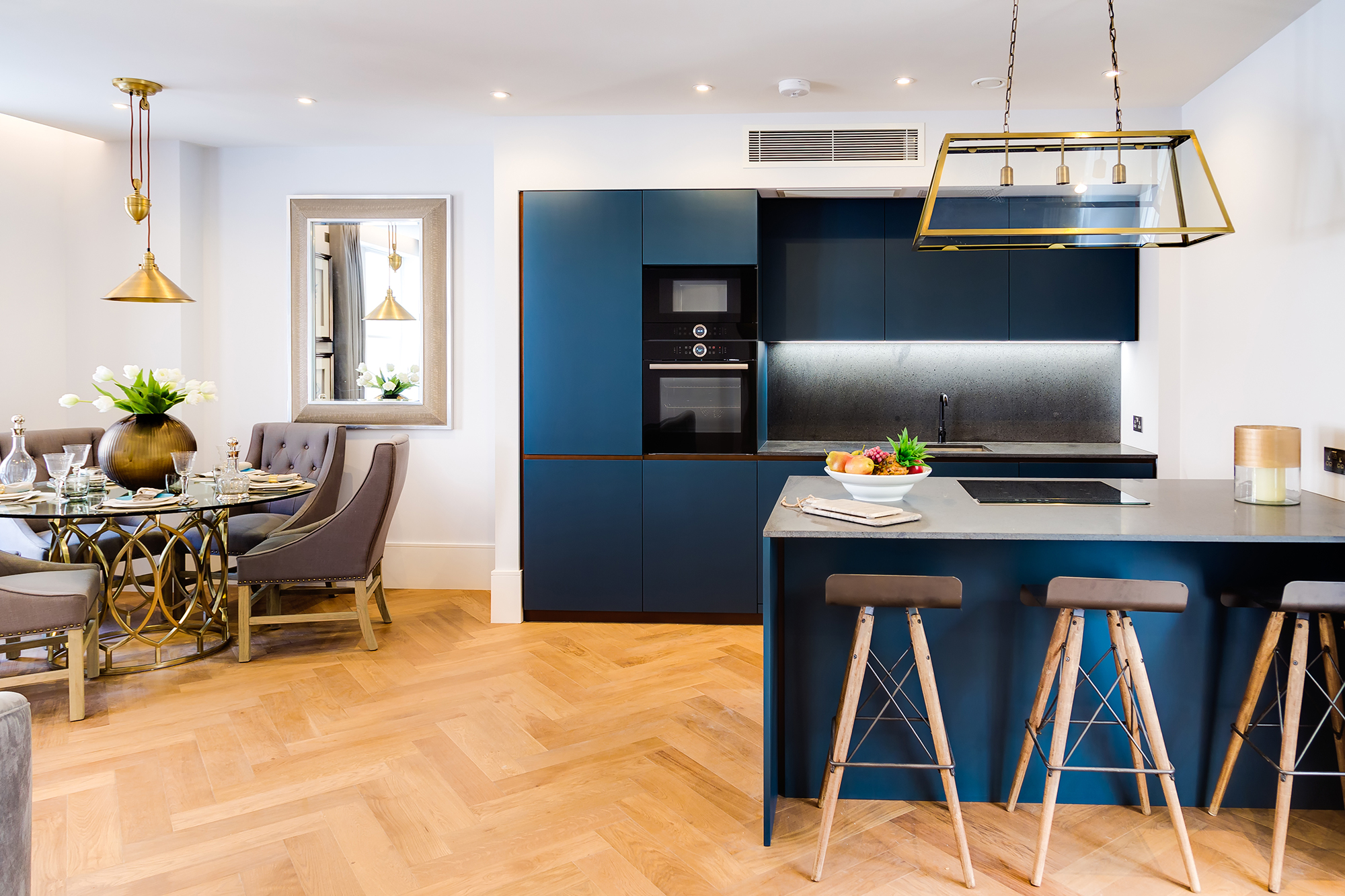
Hardwood in a Kitchen: The Honest Answer
Yes, you can install hardwood in a kitchen, but you can’t install it “like a bedroom” and expect the same outcome. Kitchens add two stressors: liquid exposure and high-frequency traffic. Success comes down to controlling moisture entry (topside + underside) and choosing a wood and finish system that’s forgiving when real life happens.
The Spill Math: How Risk Actually Works
Think of kitchen spill risk as a simple product of three things:
Frequency: how often liquid hits the floor (kids, pets, cooking habits)
Dwell time: how long it sits before cleanup
Volume: small splash vs. a dishwasher leak
Hardwood handles small volume + short dwell time well. It struggles with long dwell time, especially at seams. The goal is to reduce dwell time (routines + mats) and reduce seam vulnerability (finish + bevel choices).
Practical thresholds that matter:
Wipe within minutes: typically no issue with a good finish
Left for 30–60 minutes repeatedly: seam darkening and finish whitening becomes likely
Leaks that run under cabinets: risk of cupping and edge swelling increases sharply
Finish Strategy: The Kitchen-Proof Setup
The finish is your first line of defense. You’re deciding how easily water can penetrate micro-scratches and seams.
Best finish options for kitchens
Factory-finished aluminum oxide (pre-finished boards): tough wear layer, consistent coating, fast installation.
High-quality site-finished waterborne polyurethane: excellent clarity, strong abrasion resistance, easier recoat cycles.
What to avoid (or be cautious with)
Wax oils / hardwax oils: beautiful, but require stricter maintenance and faster spill response.
High-gloss: shows micro-scratches and water spotting more than satin/matte.
Pro detail: edge profile matters
Choose micro-bevel or tight bevel if you want a more forgiving look. A perfectly flat, square-edge look can show swelling at seams more dramatically if moisture events happen.
Best Species Picks for Kitchens
Species choice is about dimensional stability (how much it moves with moisture changes) plus grain structure and stain behavior.
Top picks:
White Oak: excellent stability, closed grain helps reduce stain absorption, and it hides wear better.
Hickory (with caution): very hard, but it moves more with humidity swings; installation and acclimation must be done correctly.
Maple (hard maple): hard and dense, but can show blotching with certain stains; better with clear/neutral finishes.
Less ideal:
Red Oak: more open grain, more likely to show dark seam staining over time if spills are frequent.
Very soft species (pine, etc.): dents and finish breakdown appear faster in busy kitchens.
Install Details That Make or Break the Outcome
Kitchen hardwood fails when moisture management is treated like an afterthought. A professional install focuses on the “invisible” steps:
1) Moisture testing and acclimation
Verify subfloor moisture and jobsite conditions are stable before install.
Acclimate wood to the home’s normal living conditions, not “windows open during renovations” conditions.
2) Subfloor flatness and fastening
An uneven subfloor creates flex, which accelerates finish cracking at seams. Correct prep reduces long-term squeaks and seam issues.
3) Expansion gaps and pinch points
Kitchens have lots of fixed objects. Expansion gaps must be planned around cabinets, islands, and transitions so the floor can move seasonally without compressing and tenting.
4) Appliance and sink risk controls
Use a dishwasher pan or leak tray when possible.
Ensure fridge water lines are secure and accessible.
Use breathable kitchen mats at sink and stove zones (avoid rubber-backed mats that can trap moisture).
Maintenance That Prevents “Kitchen Patina” From Turning Ugly
Use a pH-neutral hardwood cleaner (avoid harsh degreasers and vinegar mixes).
Put felt pads under movable stools and chairs.
Keep indoor humidity in a reasonable band year-round to reduce seasonal gaps.
Plan a screen-and-recoat before the finish wears through in traffic lanes.
When Hardwood Is the Wrong Call
Choose a different floor if:
You’ve had recurring dishwasher/fridge leaks in the past.
The home runs very humid or very dry without control.
You want “zero rules” living and don’t want to think about wiping spills quickly.
In those cases, a high-quality laminate or another resilient option may deliver the look with less stress.
Hardwood in a kitchen works when the spill math is realistic, the finish is chosen for your habits, and the install is executed with moisture and movement in mind. Moore Floors, Inc. can help you compare species, finishes, and installation methods so your kitchen floor performs as good as it looks. Visit us at Southern Pines, NC and see options in person. We serve Southern Pines, NC, Pinehurst, NC, Aberdeen, NC, Carthage, NC, Foxfire, NC, Vass, NC, Pinebluff, NC, West End, NC, Laurinburg, NC, Raeford, NC . For a buyer-ready estimate and spec-driven recommendations, contact us today.


