


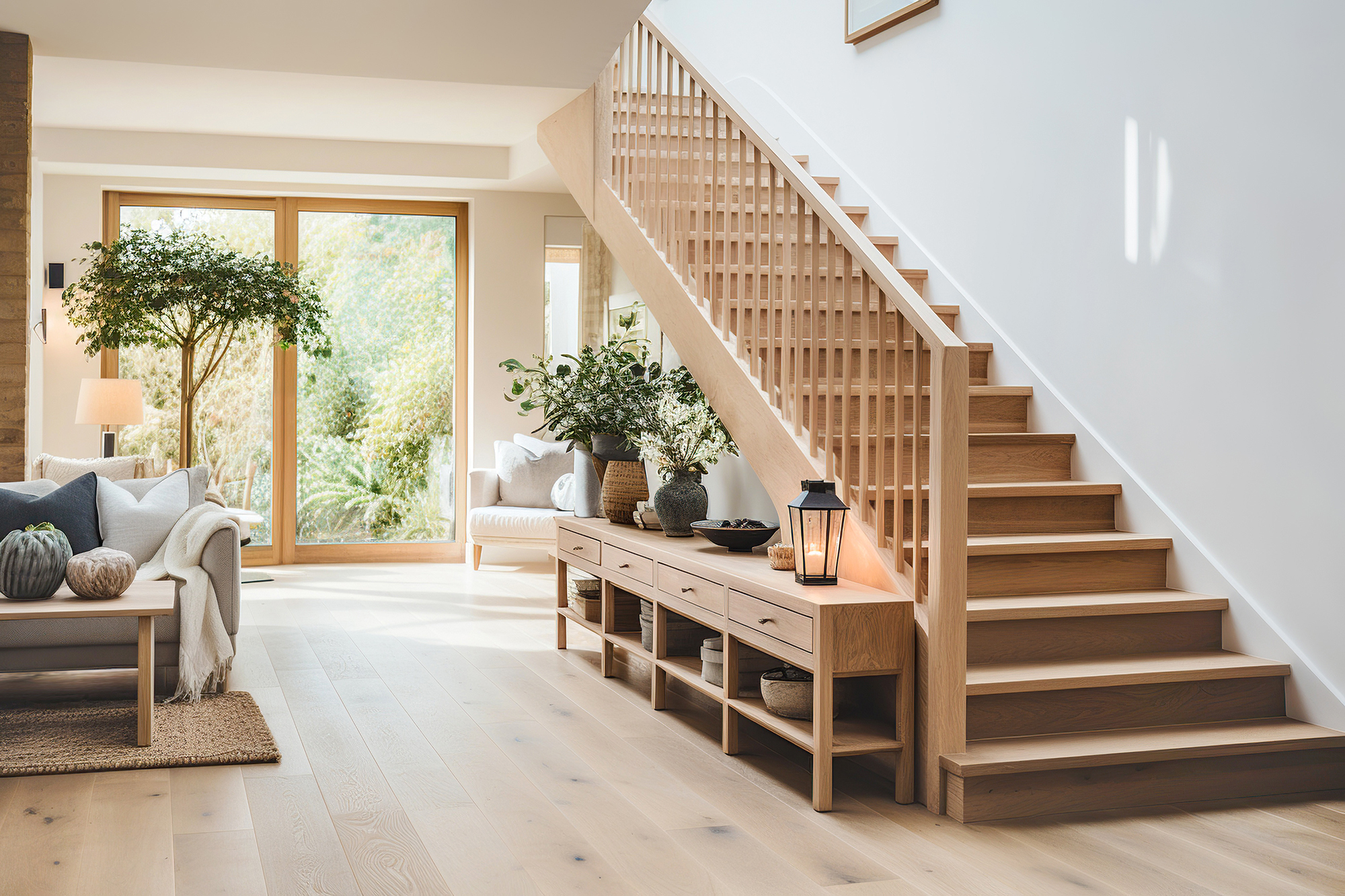
Stairs get treated as an afterthought in a lot of flooring plans, right up until the treads and nosing end up looking noticeably different from the hardwood on the floor around them. This is a more common problem than people expect, mostly because stair components are manufactured differently than flooring planks, and small differences in wood source, milling, and finish application can show up clearly once everything is installed side by side under the same lighting.
Getting ahead of this before installation day, rather than discovering a mismatch afterward, is really the difference between stairs that flow naturally into the surrounding floor and stairs that look like a separate project entirely.
Why Stair Treads Don't Always Come From the Same Batch as Your Flooring
Flooring planks and stair tread components are frequently produced in different runs, sometimes by different manufacturers entirely, even when they're labeled as the same species and finish. Wood is a natural material, and color variation between harvests, along with differences in how a tread's thicker, more structural cut takes stain compared to a thinner flooring plank, can produce a visible difference even when both pieces are technically the correct species.
This is worth asking about directly before you order anything. Requesting tread and nosing samples alongside your flooring samples, then looking at them together under the same lighting in the room where they'll actually be installed, catches a mismatch while it's still an easy fix rather than after installation when it's a much bigger correction.
The Role of Nosing Profile in How a Staircase Reads
The nosing, meaning the rounded front edge of each stair tread, does more for the overall look of a staircase than most people expect, and it comes in several different profile shapes and overhang depths. A nosing profile that doesn't match the general style of your flooring, for instance a heavily rounded traditional profile paired with a modern, minimal plank floor, can make the stairs feel disconnected from the rest of the home even when the wood color itself is a reasonably close match.
Thinking about nosing profile as a style decision, not just a functional one, helps tie the staircase into the rest of your flooring plan. A square edge or subtle bullnose profile tends to read as more contemporary, while a fuller bullnose or traditional profile leans more classic, and matching that choice to your flooring's overall plank style makes a bigger visual difference than most homeowners anticipate going in.
Finish Sheen Differences Are More Visible on Stairs Than on Floors
Stairs catch light differently than a flat floor surface does, since each tread is angled slightly toward whatever light source is nearby, whether that's a window, a hallway fixture, or natural light from an open stairwell. This means a finish sheen that looks perfectly matched to your flooring when compared on a sample board can actually read as noticeably different once it's installed on an angled stair tread catching light at a different angle throughout the day.
This is a detail that's easy to miss during the sample selection process and only becomes obvious once installation is complete. Asking your installer specifically about how a given sheen performs on stair surfaces, not just on flat flooring, is worth the conversation before finishing is applied, particularly for satin and semi gloss options where the difference tends to be most noticeable.
Matching Existing Stairs When Only the Floor Is Being Replaced
If your stairs are staying as they are and only the surrounding floor is being replaced, the matching challenge runs in the opposite direction, working backward from an existing tread color to find a compatible flooring product. This is where bringing a small sample of your actual stair material, not just a paint chip or a photo, to your flooring consultation makes a real difference, since wood tone can photograph very differently than it appears in person.
In cases where an exact match isn't realistically available, a deliberately complementary tone often reads better than a slightly off attempt at an exact match. A flooring specialist who can compare your actual stair sample against current product options in person is in a much better position to guide that decision than trying to match colors from memory or a photo alone.
Getting stairs and flooring to work together as one cohesive look takes a bit more planning than flooring alone, but it's a detail worth getting right the first time. The team at Moore Floors, Inc. helps homeowners compare stair components against solid and engineered hardwood for Pinehurst homes in person, so the match holds up under real lighting rather than a sample board guess. Visit us at Southern Pines, NC or contact us to bring in your stair samples for a side by side comparison. We proudly serve homeowners throughout Southern Pines, NC, Pinehurst, NC, Aberdeen, NC, Carthage, NC, Foxfire, NC, Vass, NC, Pinebluff, NC, West End, NC, Laurinburg, NC, Raeford, NC .


